Floating Village Life on Tonle Sap Lake
Discover Tonle Sap Lake, Cambodia’s largest freshwater lake in Southeast Asia, where families live in floating villages and adapt to the changing seasons with creativity and skill.
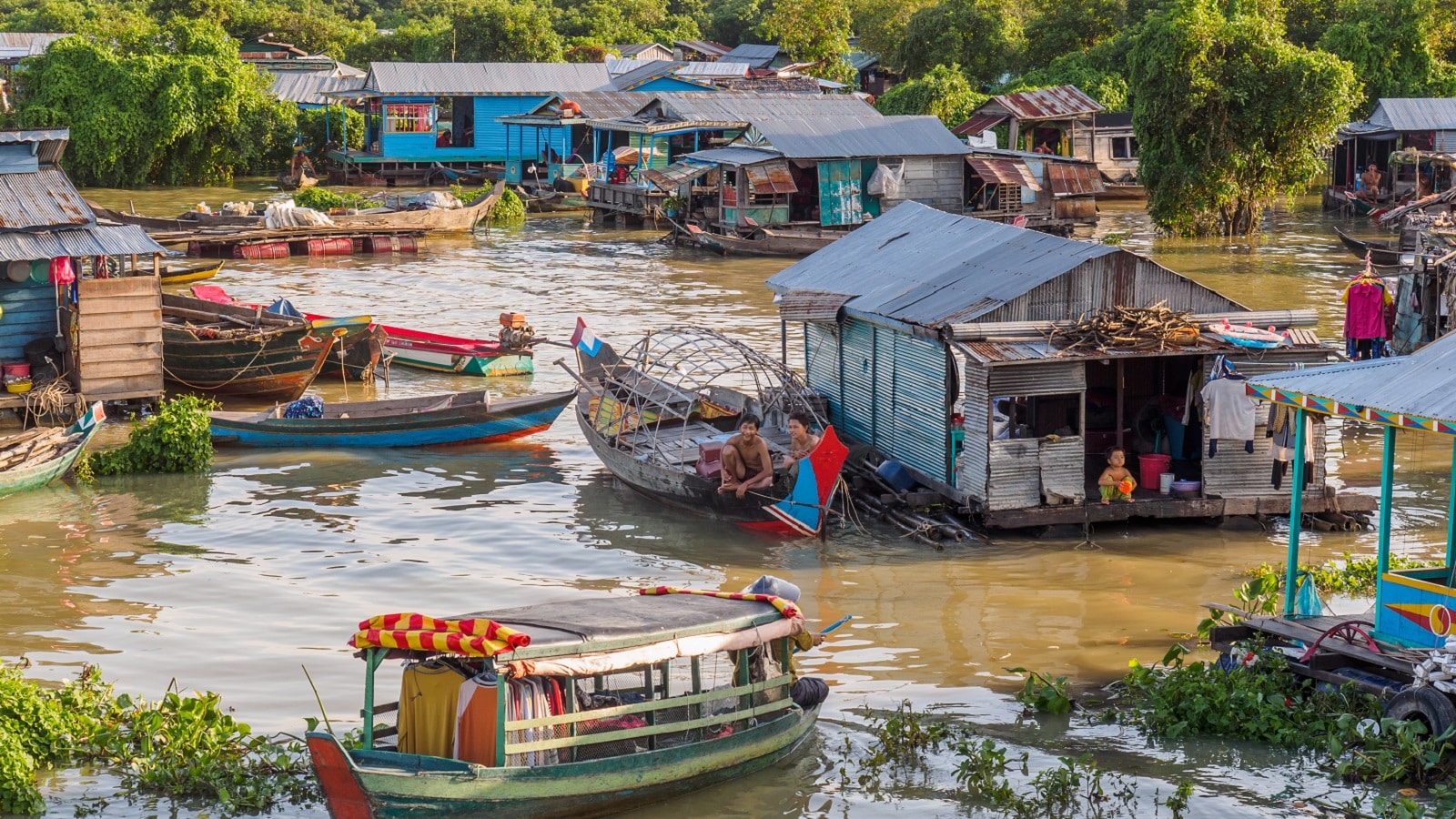
The Extraordinary World of Tonle Sap
Tonle Sap Lake grows and shrinks with the seasons, creating special living conditions and unique communities around it.
Seasonal Transformation
| Season | Lake Size |
|---|---|
| Dry Season | 2,700 km² |
| Wet Season | 16,000 km² |
Lake Productivity
- 400,000 tonnes of fish annually
- 200+ fish species supported
- Crucial protein source for Cambodia
Life in the Floating Villages
The floating villages of Tonle Sap show how people have learned to live and work on water with homes, schools, and markets that float and move with the lake’s changing levels.
Daily Life Rhythms
Life follows the lake’s seasons. Families rise early to fish when the water and weather are best.
Ingenious Architecture
Houses stand on tall wooden posts above the water, made from bamboo, palm leaves, and other local materials.
Main Villages
- Chong Knea
Most accessible, tourist-friendly - Kampong Phluk
Mangrove forests, stilted houses - Kampong Khleang
Largest village, most authentic
Community Services
Education
Floating schools that move with water levels, bringing education directly to scattered communities on modified boats or floating platforms.
Healthcare
Combination of traditional medicine, community knowledge, and mobile medical teams visiting remote aquatic communities.
Religion
Buddhist temples on floating platforms or tall stilts serve as spiritual centres that accommodate changing water levels.
The Fishing Culture and Traditional Practices
Fishing is both economic activity and a way of life in villages with generations passing down skills and sustainable methods.
Traditional Techniques
- Various types of nets for different species
- Traditional traps and lines
- Large-scale nets requiring coordination
- Seasonal fishing patterns
Fish Processing
- Drying and salting techniques
- Fermentation processes
- Smoking methods
- Prahok (fermented fish paste) production
Seasonal Adaptations and Challenges
Dry Season (Nov-May)
- Lake shrinks to 2,700 km²
- Fish concentrated in smaller area
- Intensive fishing activities
- Houses on stilts above dry land
- Alternative livelihoods needed
Wet Season (Jun-Oct)
- Lake expands to 16,000 km²
- Fish spread throughout expanded lake
- New feeding areas available
- Houses float on water
- Peak fishing season
Visiting the Floating Villages
Getting There
Most tours to the floating villages start from Siem Reap. It takes about 4–6 hours to explore the villages.
What to Expect
- Traditional stilted and floating houses
- Local fishing demonstrations
- Floating schools and markets
- Cultural interactions with residents
- Sunset views over the lake
Best Time to Visit
Dry Season (Nov-Apr): Houses on stilts, easier access
Wet Season (May-Oct): True floating experience, lush scenery
Each season offers different perspectives of village life
Responsible Tourism and Community Support
The floating villages are real communities, Tourists are advised to visit with respect and sensitivity.
Respectful Practices
- Ask permission before photographing people
- Support local businesses and crafts
- Learn about the culture before visiting
- Follow your guide's instructions
Community Benefits
- Tourism provides alternative income
- Cultural exchange opportunities
- Preservation of traditional ways
- Educational opportunities for children
Quick Facts
- Location: Tonle Sap Lake, Cambodia
- Population: ~100,000 people
- Tour Duration: 4-6 hours
- Cost: $30-50 USD per person
- Languages: Khmer, Vietnamese
What to Bring
- Sun protection and hat
- Camera with extra batteries
- Water and snacks
- Insect repellent
- Small bills for purchases
- Comfortable shoes
Related Articles
Cultural Adventure
Ready to explore Cambodia's unique floating villages? Get your eVisa first!